A slow sink or occasional gurgle can be easy to dismiss, but small drainage problems often become disruptive emergencies. Here is what Sussex householders should look for, what causes blockages and when to call a specialist.
From seafront flats in Brighton and Hove to family homes in Worthing, Burgess Hill, Haywards Heath, Horsham and Crawley, drainage problems can affect almost any property. Some blockages happen suddenly, but many give clear warning signs first. Acting early can prevent wastewater from backing up, reduce the risk of damage and make the problem easier to diagnose.
Knowing what to watch for is especially useful during wet weather and in autumn, when outside gullies can collect leaves, silt and garden debris. Internal drains have their own common causes, including cooking fat, food residue, hair, soap build-up and wet wipes.
The first signs of a blocked drain
One slow outlet may indicate a local blockage close to a sink, bath or shower. If several fixtures are draining slowly at the same time, the restriction may be farther along the drainage system. Water rising in a toilet when another appliance empties is another sign that air and wastewater are struggling to move through the pipework.
Gurgling noises should not be ignored. They are often caused by trapped air being pulled through water seals as flow becomes restricted. Persistent unpleasant smells can also point to waste sitting inside a pipe rather than moving away properly.
Outside, look for standing water around a gully, an inspection chamber filling higher than usual, or wastewater appearing where it should not.
A drain camera inspection can help identify damage, root ingress or the cause of a recurring blockage.
What commonly causes blocked drains in Sussex?
Kitchen blockages frequently develop when fats, oils and food scraps enter the waste pipe. Liquid cooking fat cools and hardens, coating the inside of the pipe and catching more debris. Over time, the opening becomes narrower until water can no longer pass freely.
In bathrooms, hair and soap residue can form a dense obstruction. Toilets and main drains are often affected by wet wipes and sanitary products. Even products labelled “flushable” may not break down quickly enough inside a real drainage system. The safest rule is simple: only toilet paper and human waste should be flushed.
Outside, leaves, soil and silt can collect in gullies and surface-water drains. Tree roots may also enter older or damaged pipe joints in gardens. Clearing the root can restore flow, but if it has entered through a defective joint or crack, further investigation and repair may be needed to stop the problem returning.
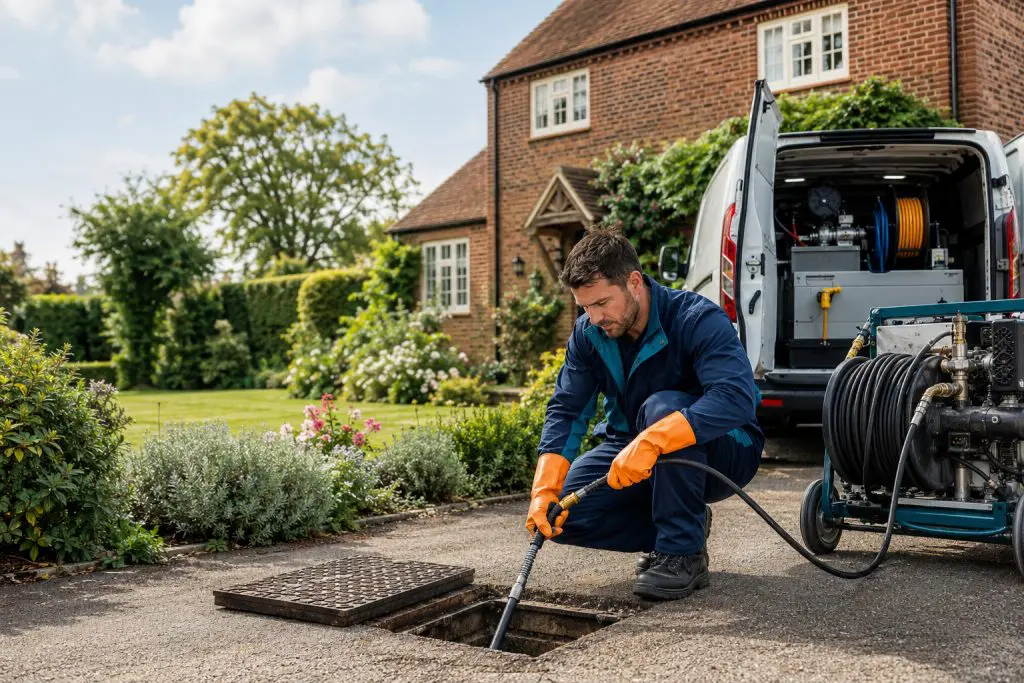
Professional equipment allows the drainage engineer to investigate and clear problems through the correct access point.
What should you do when a drain starts backing up?
Reduce water use immediately. Stop using the affected sink, toilet, shower or appliance until you understand where the water is going. If an outside chamber is already full, running more water can make the overflow worse. Keep children and pets away from wastewater, and avoid handling it without suitable protection.
Chemical drain cleaners are rarely the answer to a serious blockage. They may sit in the pipe, create a hazard for anyone working on it later and can be unsuitable for some older systems. Do not attempt to lift a heavy or sealed inspection-chamber cover yourself. A drainage specialist can choose the safest access point and the right clearance method.
How a drainage specialist finds the real cause
Professional drain unblocking is not simply about pushing a small opening through the obstruction. The system should be cleared properly and then checked to confirm that water is flowing freely. Depending on the situation, the engineer may use mechanical equipment, high-pressure water jetting or a drain camera inspection.
High-pressure water jetting can remove grease, scale, silt and other deposits from the pipe walls. A camera inspection is useful when a blockage keeps returning or when root ingress, displaced joints, cracks or a partial collapse are suspected. Finding the cause helps the property owner choose an appropriate repair instead of repeatedly paying to treat the same symptom.
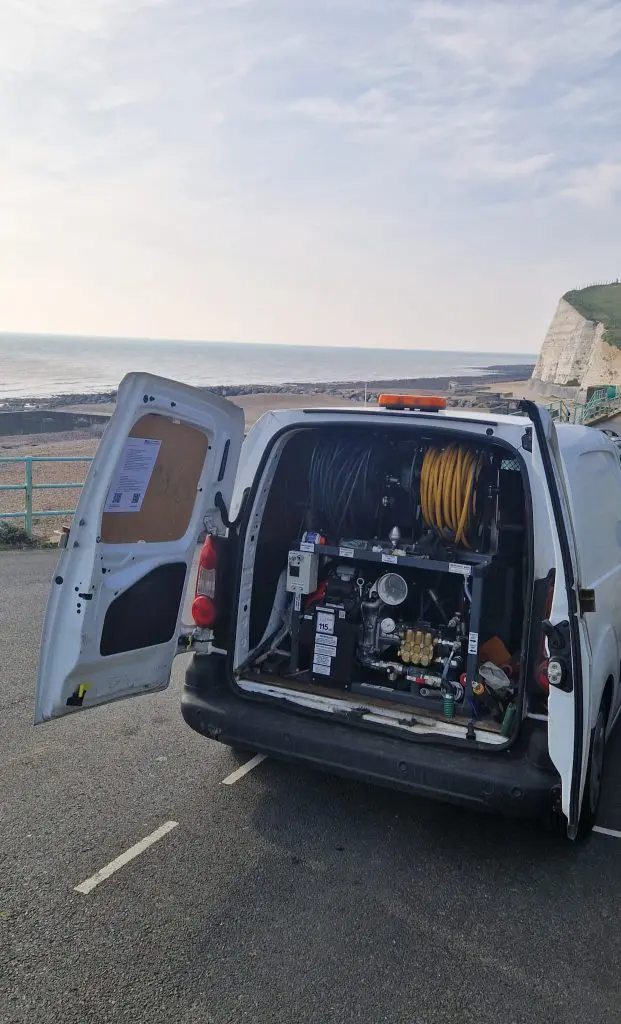
High-pressure water jetting can clear stubborn deposits and thoroughly clean the inside of drainage pipes.
Simple habits that help prevent another blockage
Small changes make a meaningful difference. Allow cooking fat to cool and place it in the bin rather than pouring it into the sink. Use sink strainers to catch food and hair. Put wipes, cotton products and sanitary items in a waste bin, regardless of how they are labelled. Clear leaves from outdoor gullies before heavy rain, and arrange maintenance for any drain that repeatedly becomes slow or starts to smell.
Landlords, restaurants, shops and managed properties may benefit from planned drain cleaning, particularly where the system carries frequent kitchen waste or serves several users. Preventive attention is normally less disruptive than dealing with an overflowing drain during business hours or at night.
Local help across Sussex
Drainage & Plumbing Ltd provides dedicated drainage services for homes and businesses across East and West Sussex, including Brighton, Hove, Worthing, Burgess Hill, Haywards Heath, Horsham, Crawley, Eastbourne and surrounding areas. The team handles blocked drains, toilets, sinks, gullies and inspection chambers, as well as drain cleaning, root cutting, camera inspections and drain repairs. For professional drain unblocking across Sussex, customers can request a fixed quote before work begins, with no call-out fee.
If water is backing up, sewage is overflowing or several drains are affected at once, treat the situation as urgent. Stop using the system and contact a drainage specialist promptly. Acting early can protect the property, reduce disruption and help get the drains safely back to full flow.