University of Brighton develops pioneering sensor to detect arthritis before joint damage occur.
University of Brighton researchers are developing a first-of-its-kind sensor that could detect osteoarthritis before irreversible joint damage occurs – opening new possibilities for earlier diagnosis, treatment, and prevention. A team of researchers at the University of Brighton has begun work on a pioneering new sensor that could transform how osteoarthritis is diagnosed – by detecting the disease before lasting damage is visible on scans or symptoms become severe.
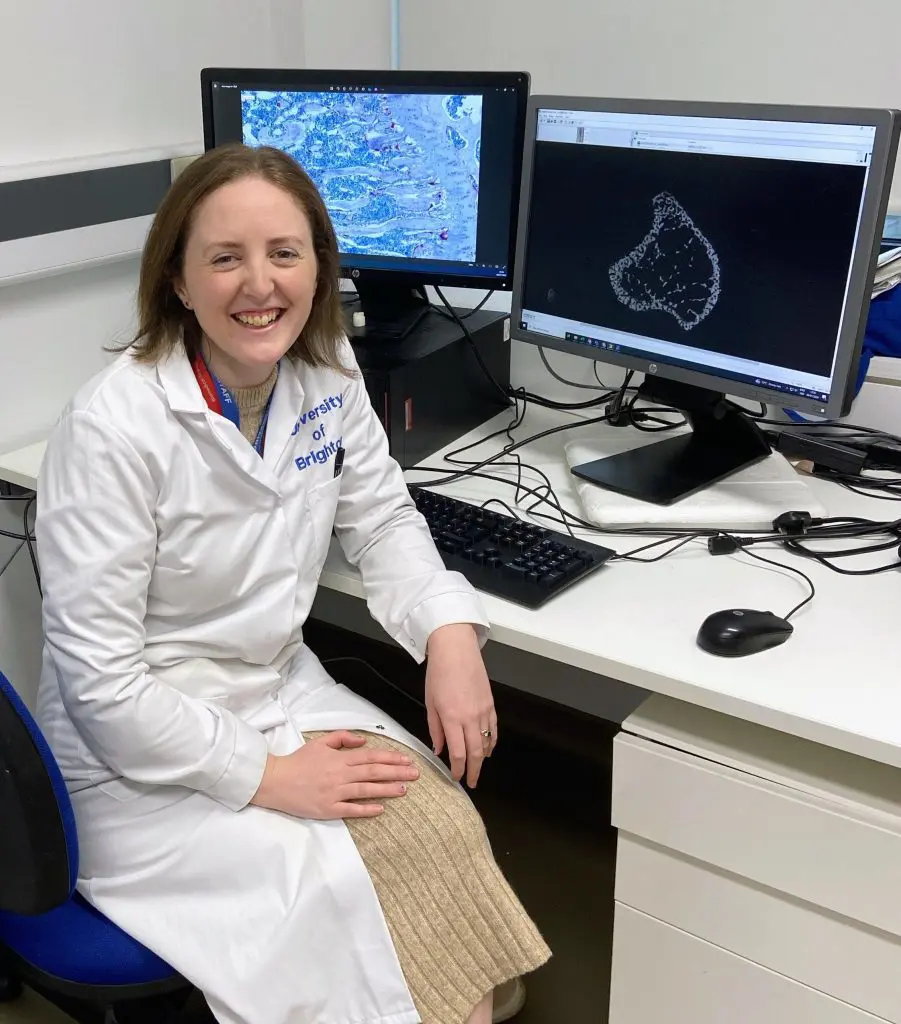
The 14-month project is being led by Professor Katherine Staines, (photographed above) with Professor Bhavik Patel and Dr Lisa Mullen, all from the University’s Centre for Lifelong Health. Supported by £107,824 from Arthritis UK, the research will apply advanced sensing technology to osteoarthritis for the first time.
Building on new sensing technology
Osteoarthritis affects more than 10 million people across the UK and is one of the leading causes of pain, stiffness, and reduced mobility. Despite its widespread impact, the condition is often only diagnosed once significant damage has already occurred inside the joint. Current treatments can help manage symptoms, but there is still no reliable way to identify who is at risk or to detect the disease in its earliest stages.
Researchers at Brighton hope to change that. The team is developing a sensor designed to detect tiny chemical changes in joint fluid that may signal the earliest signs of osteoarthritis – long before damage can be seen through current diagnostic methods.
By identifying these early warning signs, researchers hope the technology could eventually help clinicians diagnose the condition sooner, monitor how it progresses, and intervene before joints become permanently damaged.
The project builds on new sensing technology originally developed by Professor Patel and his team for other biological applications. This will be the first time the technology has been adapted and tested in osteoarthritis research.
Combining expertise
Professor Staines said: “At the moment, osteoarthritis is often diagnosed only after significant and irreversible joint damage has already occurred. We want to change that. By combining expertise in skeletal biology and sensor technology, we have an opportunity to detect the earliest changes linked to osteoarthritis before lasting damage takes hold. If successful, this could open the door to earlier diagnosis, better monitoring of disease progression, and ultimately improved quality of life for millions of people living with joint disease.”
Researchers will begin by testing the sensor using synovial fluid – the natural fluid that cushions and lubricates joints – to understand whether it can identify a distinct biological pattern linked to osteoarthritis. If successful, the long-term ambition is to develop the technology into a tool that could one day support earlier diagnosis in clinics and help monitor joint health over time.
Professor Staines joined the University of Brighton in 2020 and became Professor of Skeletal Biology in 2024. Her research focuses on understanding how bones and joints develop, age, and become damaged, with a particular focus on musculoskeletal disease. This latest project reflects the University of Brighton’s growing reputation for bringing together science, healthcare, and technological innovation to tackle some of society’s biggest health challenges.